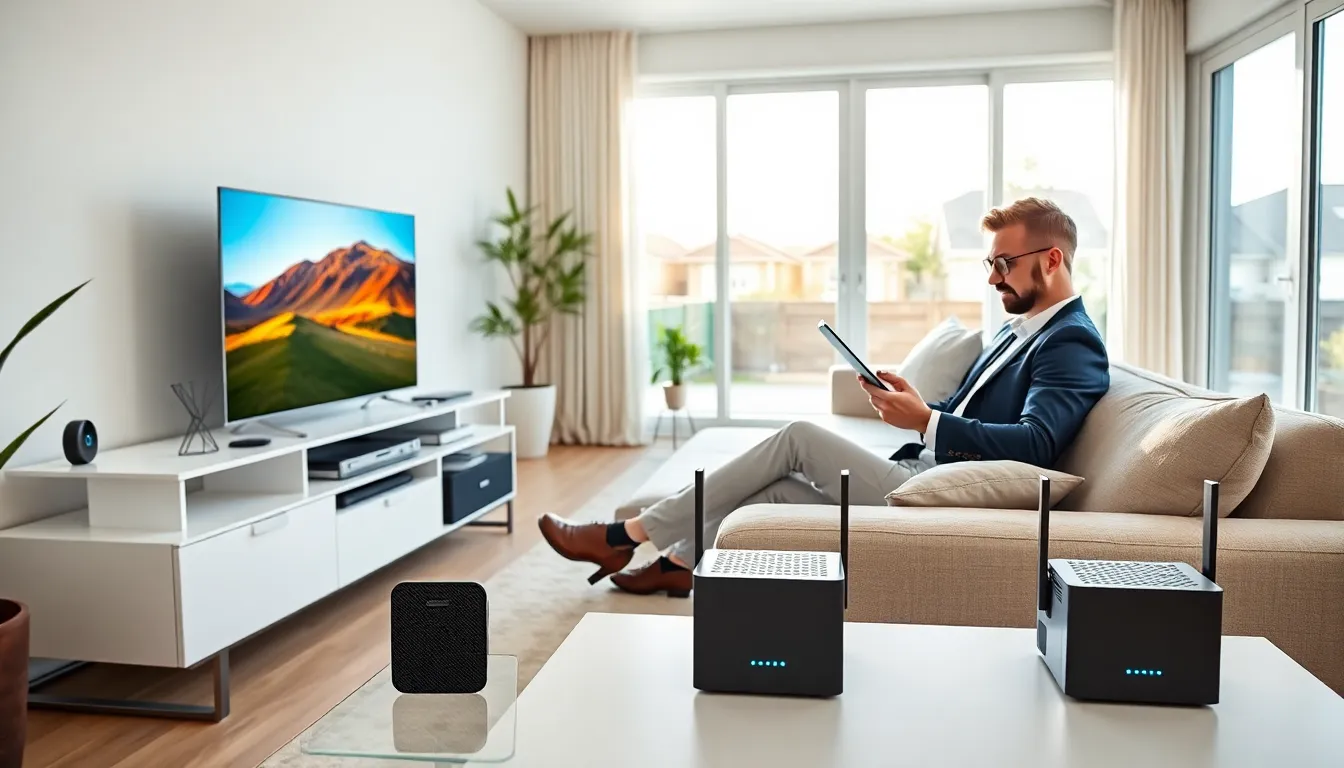

Home networking trends 2026 are set to transform how people connect, stream, and manage their devices. The average household now runs over 20 connected devices, and that number keeps climbing. Faster speeds, smarter management, and tighter security sit at the top of every homeowner’s wish list. This year brings real progress on all three fronts. From Wi-Fi 7 hitting store shelves to AI taking over network optimization, the connected home is about to get a serious upgrade. Here’s what consumers and tech enthusiasts should expect from home networking trends 2026.
Table of Contents
ToggleKey Takeaways
- Wi-Fi 7 becomes mainstream in 2026, offering speeds up to 46 Gbps and Multi-Link Operation for seamless streaming, gaming, and video calls.
- AI-powered network management automatically optimizes bandwidth, detects threats, and predicts maintenance needs without user intervention.
- Home networking trends 2026 show Matter 2.0 and Thread border routers simplifying smart home integration while reducing network congestion.
- Mesh networks now deliver whole-home gigabit coverage with self-healing capabilities and outdoor nodes for extended reach.
- Enhanced security features like WPA3 encryption, built-in VPN support, and automatic firmware updates come standard in consumer routers.
- Privacy-focused tools, including ad tracker blocking and encrypted DNS, give users greater control over their personal data.
Wi-Fi 7 Becomes Mainstream
Wi-Fi 7 is finally moving from early adopter territory into everyday homes. The IEEE 802.11be standard delivers speeds up to 46 Gbps, roughly four times faster than Wi-Fi 6E. For most users, this means 8K streaming, VR gaming, and video calls can all run at once without a hiccup.
Home networking trends 2026 show major router manufacturers releasing affordable Wi-Fi 7 models. Prices have dropped significantly since the technology’s debut in late 2024. Now, consumers can find quality Wi-Fi 7 routers under $300.
The real game-changer is Multi-Link Operation (MLO). This feature lets devices connect across multiple frequency bands simultaneously. If one band gets congested, traffic shifts automatically. Latency drops to as low as 1 millisecond in ideal conditions. Gamers and remote workers will notice the difference immediately.
Device compatibility is catching up fast. Smartphones, laptops, and smart TVs released in 2026 increasingly ship with Wi-Fi 7 chips. Early adopters who bought Wi-Fi 7 routers last year will finally see their hardware reach full potential.
One thing to keep in mind: older devices won’t suddenly gain Wi-Fi 7 speeds. But, Wi-Fi 7 routers remain backward compatible. They’ll still improve network management for mixed-generation device households.
AI-Powered Network Management
Artificial intelligence is changing how home networks operate. Instead of manually adjusting settings, AI handles optimization in real time. Home networking trends 2026 highlight this shift as one of the biggest quality-of-life improvements for average users.
Modern routers now analyze traffic patterns and predict bandwidth needs. Streaming a movie at 8 PM every night? The network learns this behavior and pre-allocates resources. A video conference starts? AI prioritizes that connection automatically.
Threat detection has also improved through machine learning. AI systems identify unusual device behavior that might signal malware or a breach. They can quarantine suspicious devices before damage spreads. This happens without user intervention.
Some manufacturers are introducing voice-controlled network management. Users can ask their smart assistant to run speed tests, check which devices are online, or temporarily pause internet access for specific gadgets. It’s practical and surprisingly useful for parents managing screen time.
Home networking trends 2026 also bring predictive maintenance. AI monitors router health and warns users before hardware fails. It can recommend firmware updates and apply them during low-usage hours. Network downtime becomes rare rather than expected.
Enhanced Smart Home Integration
Smart home devices are multiplying fast. Lights, thermostats, cameras, door locks, and appliances all demand reliable connectivity. Home networking trends 2026 address this growth with better integration between routers and smart home ecosystems.
Matter 2.0 is making waves this year. The protocol simplifies device setup and improves interoperability across brands. A smart light from one company now works seamlessly with a hub from another. Network routers increasingly serve as Matter controllers, eliminating the need for separate hubs.
Thread border routers are becoming standard in new mesh systems. Thread creates a low-power mesh network specifically for IoT devices. It reduces congestion on the main Wi-Fi network while keeping smart home gadgets responsive.
Home networking trends 2026 show manufacturers building dedicated IoT channels into their routers. These separate lanes handle smart device traffic without affecting streaming or gaming performance. Some systems even create automatic VLANs to isolate IoT devices for security purposes.
Setup processes have simplified dramatically. QR code scanning and NFC pairing now handle most device additions. Gone are the days of entering lengthy passwords on tiny smart plug screens.
Mesh Networks and Whole-Home Coverage
Mesh networking has graduated from premium option to standard expectation. Dead zones frustrate everyone, and consumers are done tolerating them. Home networking trends 2026 show mesh systems dominating router sales.
Wi-Fi 7 mesh kits now deliver consistent gigabit speeds throughout large homes. Tri-band and quad-band configurations keep backhaul channels separate from device connections. This prevents the performance drops that plagued earlier mesh generations.
Self-healing networks have improved considerably. When one node goes down, others automatically redistribute coverage. Users might not even notice the disruption. Placement recommendations have also gotten smarter, apps now use floor plans and building materials to suggest optimal node locations.
Home networking trends 2026 bring outdoor mesh nodes to more product lines. These weatherproof units extend coverage to yards, garages, and detached buildings. With more people using outdoor smart devices and security cameras, this expansion matters.
Pricing has become competitive. A quality three-node mesh system now costs what a single high-end router did three years ago. For homes over 2,000 square feet, mesh has become the default recommendation.
Security and Privacy Advancements
Security threats targeting home networks continue to evolve. Fortunately, so do defenses. Home networking trends 2026 put security features front and center in consumer routers.
WPA3 encryption is now standard across new devices. This protocol fixes vulnerabilities present in WPA2 and adds protection against brute-force password attacks. Even if someone captures network traffic, decrypting it becomes extremely difficult.
Built-in VPN support has expanded beyond enthusiast-grade equipment. Many consumer routers now offer one-click VPN configuration. Users can route all household traffic through encrypted tunnels without installing software on each device.
Home networking trends 2026 also feature automatic firmware updates enabled by default. Router manufacturers learned from past security incidents. Keeping firmware current patches vulnerabilities before attackers can exploit them.
Parental controls have matured significantly. Content filtering, time limits, and activity monitoring integrate directly into router apps. Parents can manage access without third-party subscriptions.
Privacy-focused features are gaining traction too. Some routers now block known advertising trackers at the network level. Others offer encrypted DNS options that prevent ISPs from logging browsing activity. Control over personal data is shifting back to users.